Sunday, September 16, 2018

Indian History chronology


Indian History Chronology: Ancient India to Modern India – Learn faster!
Filed under: Indian History Notes and last updated on September 30th, 2017 at 12:19 pm.
Description: Indian History ChronologyIndian History Chronology: Indian History is a topic of interest to many including foreigners because of the cultures and civilizations existed in this sub-continent. History of India can be studied under political, cultural, religious or economic heads.
Indian History Chronology
Chronologically, Indian History can be classified into three periods – Ancient India, Medieval India and Modern India.
Ancient India (Pre-historic to AD 700)
Description: ancient india
There were activities of proto-humans (
Homo erectus) in the Indian subcontinent 20 lakh years (2 million years) ago, and of Homo sapiens since 70,000 BC. But they were gathers/hunters.
The first inhabitants of Indian subcontinent might have been tribals like Nagas (North-East), Santhals (East-India), Bhils (Central India), Gonds (Central India), Todas (South India) etc. Most of them are speakers of the Austric, pre-Dravidian languages, such as Munda and Gondvi. Dravidians and Aryans are believed to be immigrants who came later to the sub-continent.
Ancient India can be studied under other heads like Paleolithic, Mesolithic, Neolithic and Chalcolithic period – based on the type of stone/ metal tools people used.
Paleolithic Period (2 million BC – 10,000 BC)
·         Fire
·         Tools made up of lime stone
·         Ostrich Eggs
·         Important Paleolithic sites: Bhimbetka (M.P), Hunsgi, Kurnool Caves, Narmada Valley (Hathnora, M.P), Kaladgi Basin
Mesolithic Period (10,000 BC – 8,000 BC)
·         Major Climatic Change happened
·         Domestication of animals ie Cattle rearing started
·         Microliths found at Brahmagiri (Mysore), Narmada, Vindya, Gujarat
Neolithic Period (8000 BC – 4,000 BC)
·         Agriculture Started
·         Wheel discovered
·         Inamgaon = An early village
·         Important Neolithic Sites : Burzahom(Kashmir), Gufkral(Kashmir), Mehrgarh(Pakistan), Chirand(Bihar), Daojali Hading(Tripura/Assam), Koldihwa(UP), Mahagara(UP), Hallur(AP), Paiyampalli(AP), Maski, Kodekal, Sangana Kaller, Utnur, Takkala Kota.
·         NB: Megalithic Sites: Brahmagiri, Adichanallur
Chalcolithic Period (4000 BC – 1,500 BC)
·         Copper Age. Can be considered part of Bronze Age. (Bronze = Copper + Tin)
·         Indus Valley Civilization (BC 2700 – BC 1900).
·         Also cultures at Brahmagiri, Navada Toli (Narmada region), Mahishadal (W.Bengal), Chirand (Ganga region)
Iron Age (BC 1500 – BC 200)
·         Vedic Period (Arrival of Aryans ie. BC 1600 – BC 600) – Nearly 1000 years (Basic books of Hinduism, ie Vedas were composed, might have written down later.)
·         Jainism and Buddhism
·         Mahajanapadas – Major Civilization after Indus Valley- On banks of river Ganga
·         Magadha empire – Bimbisara of Haryanka Kula
·         Sisunga dynasty – Kalasoka (Kakavarnin)
·         Nanda empire – Mahapadma-nanda, Dhana-nanda
·         Persian- Greek: Alexander 327 BC
Mauryan Empire (321-185 BC)
Important rulers of Mauryan Empire: Chandra Gupta Maurya, Bindusara, Asoka
Post-Mauryan Kingdoms (Middle Kingdoms):
·         Sunga (181-71 BC), Kanva (71-27BC), Satavahanas (235-100BC), Indo-Greeks, Parthians (19-45AD), Sakas (90BC-150AD), Kushanas(78AD)
·         South Indian Kingdoms – Chola, Chera, Pandyas (BC 300)
Gupta Kingdom (300AD – 800AD): Classical Period
Important ruler of Gupta Period: Samudra Gupta (Indian Napoleon)
Post Guptas or Contemporary Guptas
·         Harshvardana, Vakatakas, Pallavas, Chalukyas. Also, Hunas, Maitrakas, Rajputs, Senas and Chauhans. 
Medieval India (AD 700 – AD 1857)
Description: medieval india
·         Attack of Muhammed Bin Kassim (AD 712)
·         Rise of Islam and Sufism
·         Mohammed Ghazni (AD 1000-27)
·         Mohammed Ghori (AD 1175-1206)
* Kingdoms of South India During Medieval India – Bhamini and Vijayanagara
Delhi Sultanate (1206 AD – 1526 AD)
The following dynasties flourished one after the other during the Delhi Sultanate period.
1.    Slave Dynasty
2.    Kilji Dynasty
3.    Tuglaq Dynasty
4.    Sayyid Dynasty
5.    Lodi Dynasty
Mughals (AD 1526 – AD 1857)
·         Great Mughals
·         Later Mughals
Mughals from Babar (1526) to Aurangazeb (1707) were more powerful and hence known as Great Mughals. Mughals who ruled from 1707 to 1857 were known as Later Mughals.
·         Arrival of Europeans
·         Other Kingdoms of North India – Marathas, Sikhs
Modern India (AD 1857 +)
·         First War of Indian Independence (1857)
·         Formation of Indian National Congress (1885)
·         Formation of Muslim League (1906)
·         Non-Co-operation Movement (1920)
·         Civil Disobedience Movement (1930)
·         Quit India Movement (1942)
·         Partition of India (1947)
·         Constitutional Development of India (1946 – 1950)
·         Economic Development of India
·         Wars – India-Pak – Formation of Bangladesh; India- China
·         New Economic Policy of 1991
·         Nuclear, Space and Defense Development
History Schools
·         Orientalist School – West Patronizing the East Culture – Not active now
·         Cambridge School – Downplays ideology
·         Nationalist School – Importance to Congress and Gandhi; Hindu Nationalists for Hindutva version
·         Marxists School – Class conflict
·         Subaltern School – Caste conflict

Wednesday, July 11, 2018

Art ..what is its real value in?...remembering Sanju..1993..RK Mission...railway bomb blasts and Sacred Games

Art ..what is its real value in?...remembering Sanju..1993..RK Mission...railway bomb blasts and Sacred Games

Narendra Joshi
Art its value impact and success...

keywords :
Sanju, 1993, Railway bombs, RK mission and Sacred games
Whether any art is to be seen and valued by its skill of presentation, prowess on technique and excellence in performance ... or first and chiefly by its underlying thought and philosophy, by authenticity of its data and honesty, intensity, and impartiality in its presentation, ...or even more by its impact on larger humanity and eventual forming of some stereotypes and root canaling some sensitivities.......
the question came to me, haunted in fact with Sanju and the stupendous success it received. Raju Hirani is my favourite and Ranbeer I admire right from Rajneeti and Barfi. To be honest I liked Sanjay Dutt in many movies. Including his come back no. 1 Pappu Varmas Jaan bi bazi, Sajaan and Munnabhai. I distinctly remember seeing sajaan and saudagar back to back and finding Sajaan much better than star studded ghai masala. so was the verdict of box office.
And still Sanju i am not able to see or support.
for 1993 blasts I have seen as Mumbaikar and any dilution of facts or glorification of characters is hurting.
Today is the day when Mumbai witnessed Railway bomb blasts. I was returning from office that day and somehow felt like getting down at Khar. I went to Ramakrishna mission , dont know why, i don't go there often. when i Came out it was 7 30 pm and I was told there are serial blasts in trains, i statted walking helplessly to borivali. Many killed, injured life paralysed...i checked the timings of bombs...one of them just coinciding with the train I got down from....I am writjng today because I am alive ...I got down at Khar.
Who was benefitted by this heinous act. Who was benefited by 1993 bomb blasts....just felt very much sad deep inside.
so thought of telling this.
the questuon asked in the beginning is much deeper and perpetual.


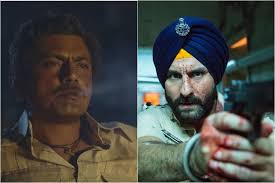
It came back but now in much more complex 'mandala' puzzle with hugely impacting way with netflix series Sacred games by Anurag Kashyap Vikramditya Nawaz Saif Radhika Jitu Girish ...all my favourites. I hv seen starting nd its really captivating...hope it is not just impacting and Captivating but also honest and giving some far reaching thought...which the team is surely capable of.....


UPSC prelims and mains DISTRIBUTION OF MARKS and options

UPSC Prelims Syllabus for Paper I – (200 marks)
Duration: Two hours (Counted for the merit rank in the Prelims)
  • Current events of national and international importance.
  • History of India and Indian National Movement.
  • Indian and World Geography – Physical, Social, Economic Geography of India and the World.
  • Indian Polity and Governance – Constitution, Political System, Panchayati Raj, Public Policy, Rights Issues, etc.
  • Economic and Social Development Sustainable Development, Poverty, Inclusion, Demographics, Social Sector initiatives, etc.
  • General issues on Environmental Ecology, Bio-diversity and Climate Change – that do not require subject specialization.
  • General Science.
UPSC Prelims Syllabus for Paper II- (200 marks)
Duration: Two hours (Not counted for the merit rank in Prelims but a qualifying Paper; just needs 33% marks)
  • Comprehension.
  • Interpersonal skills including communication skills.
  • Logical reasoning and analytical ability.
  • Decision-making and problem-solving.
  • General mental ability.
  • Basic numeracy (numbers and their relations, orders of magnitude, etc.) (Class X level), Data interpretation (charts, graphs, tables, data sufficiency etc. – Class X level)
Paper
Subject
Marks
Paper A
(One of the Indian languages listed below, to be selected by the candidate (from the languages listed in the Eighth Schedule to the Constitution of India) (Qualifying)
300
Paper B
English (Qualifying)
300
Paper I
Essay
250
Paper II
General Studies I (Indian heritage and culture, history and geography of the world and society)
250
Paper III
General Studies II (Governance, constitution, polity, social justice, and international relations)
250
Paper-IV
General Studies III (Technology, economic development, biodiversity, environment, security and disaster management)
250
Paper V
General Studies-IV(ethics, integrity, and aptitude)
250
Papers VI, VII
Two papers on subjects to be selected by the candidate from the list of optional subjects below (250 marks for each paper)
500
TOTAL(WRITTEN TEST)
1750
Candidates may choose any one of the optional subjects from amongst the list of subjects given below.
  • The papers on Indian Languages and English (Paper A and Paper B) will be of Matriculation or equivalent standard and will be of qualifying nature. The marks obtained in these papers will not be counted for ranking.
  • Evaluation of the papers, namely, ‘Essay’, ‘General Studies’ and Optional Subject of all the candidates would be done simultaneously along with evaluation of their qualifying papers on ‘Indian Languages’ and ‘English’ but the papers on ‘Essay’, General Studies and Optional Subject of only such candidates will be taken cognizance of who attain such minimum standard as may be fixed by Commission at their discretion for the qualifying papers on ‘Indian Language’ and ‘English’.
  • The paper A on Indian Language will not, however, be compulsory for candidates hailing from the States of Arunachal Pradesh, Manipur, Meghalaya, Mizoram, Nagaland and Sikkim.

List of optional subjects for UPSC Mains Examination

Literature of any one of the following languages: Assamese, Bengali, Bodo, Dogri, Gujarati, Hindi, Kannada, Kashmiri, Konkani, Maithili, Malayalam, Manipuri, Marathi, Nepali, Oriya, Punjabi, Sanskrit, Santali, Sindhi, Tamil, Telugu, Urdu and English.
The question papers for the examination will be of conventional (essay) type. Each paper will be of three hours duration. The question papers (other than the literature of language papers) will be set in Hindi and English only.

PERSONALITY TEST: 275 MARKS

Total – (B) Main Examination – 1750 Marks + (C) Personality Test – 275 Marks = 2025 Marks.
NOTE: The objective of the interview is to test the overall orientation of the candidate towards Administrative services.